One of the most ambitious promises Rockstar has made about GTA 6 is that the NPCs populating Leonida aren’t just props. They have jobs, they have routines, they have places to be. The Florida setting with its beaches, strip malls, retirement communities, biker bars, and swamp-side diners gives Rockstar a rich canvas of character archetypes, all of whom can theoretically live out their days whether you’re watching or not.
Here’s a detailed breakdown of what we know about GTA 6’s NPC AI system and what it means for how the world actually feels to play in.
What “Daily Routines” Actually Means in GTA 6
In most open-world games, NPCs are essentially on infinite loops they walk a fixed path, repeat the same animation, and reset if you interact with them. GTA V was better than average but still used this system. Characters would sit on benches, jog in circles, or drive aimlessly on preset routes.
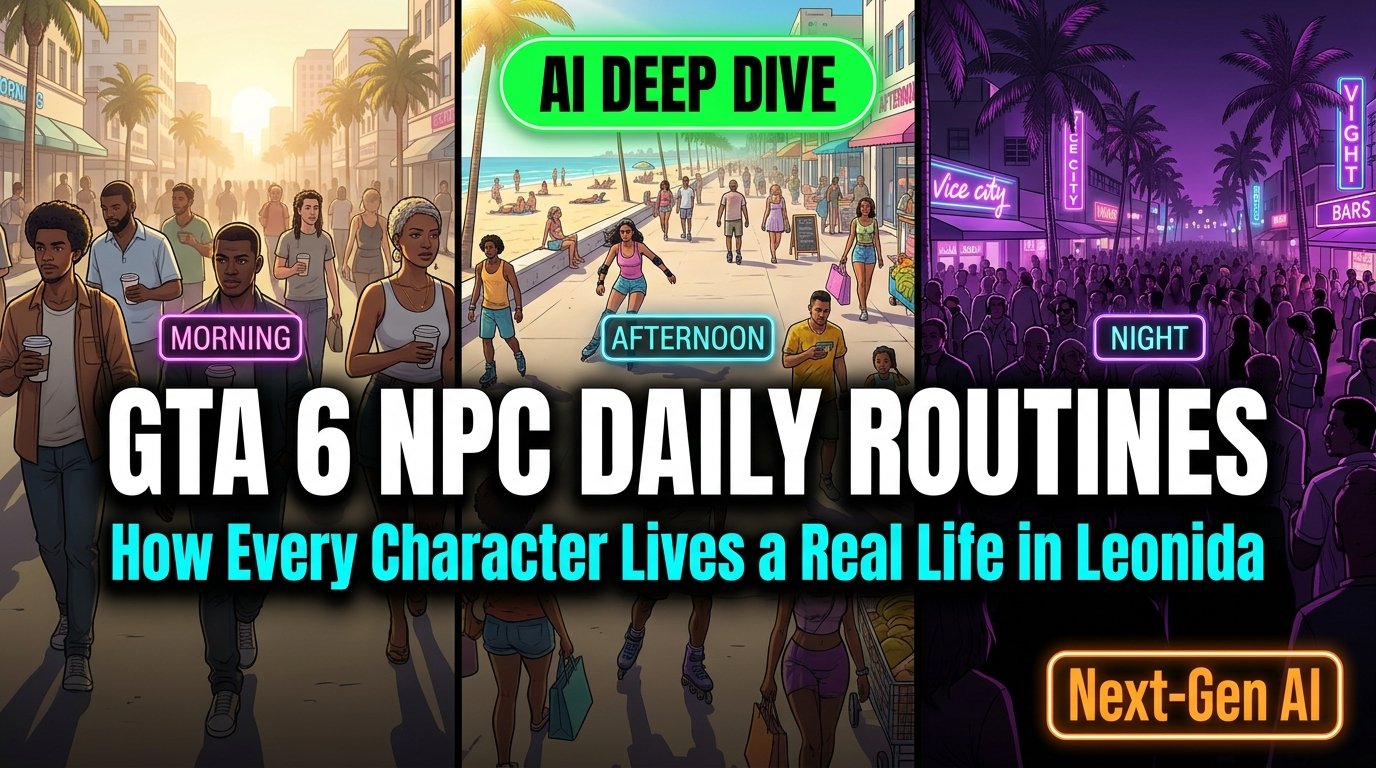
GTA 6 reportedly moves beyond this with a schedule-based NPC system. Individual NPCs have a time-of-day routine they wake up, go somewhere in the morning (a job, a coffee shop, a gym), change location at midday, and have evening and night behaviors that differ from their daytime patterns. This isn’t just animation variety. It means the same street corner looks and feels different at 7 AM versus 7 PM versus 2 AM.
How NPC Schedules Work — Breakdown by Time of Day
| Time of Day | NPC Activity Examples | World Behavior |
|---|---|---|
| 6 AM – 9 AM | Morning commute, jogging, coffee shops, school drop-offs | Heavy traffic, pedestrian rush, business openings |
| 9 AM – 12 PM | Work, shopping, construction crews active | Busy commercial areas, deliveries, city maintenance |
| 12 PM – 3 PM | Lunch breaks, beach activity peaks, tourist areas busy | Restaurants crowded, beach full, downtown active |
| 3 PM – 6 PM | School pickup, afternoon errands, early happy hour | Suburban traffic peaks, bars start filling |
| 6 PM – 10 PM | Dinner, nightlife begins, crime rate starts climbing | Restaurant rush, clubs open, streets change character |
| 10 PM – 2 AM | Bars, clubs, late-night diners, criminal activity | Drunk NPCs, fights, police more active, fewer civilians |
| 2 AM – 6 AM | Late shift workers, insomniacs, drug activity, street racing | Quiet streets but high-risk; cops more suspicious |
NPCs React to Weather in Real Time
Florida’s weather is famously volatile. Sunny mornings become afternoon thunderstorms. Hurricanes build over days. GTA 6’s NPCs are designed to respond to weather conditions dynamically — people run for shelter when it rains, beach NPCs pack up and leave when storms roll in, and during extreme weather events like hurricanes, the entire NPC population shifts into panic, evacuation, or shelter-in-place behaviors.
This isn’t just visual. It affects gameplay. Trying to find witnesses during a storm is harder because there are fewer people outside. Criminal activity during a hurricane becomes a unique opportunity because police are stretched and NPCs are distracted.
Do NPCs Remember You?
This is where things get genuinely interesting. Rockstar’s trailer showed NPCs filming Lucia with their phones — which isn’t just a visual gag about social media culture. It suggests NPCs actively process and record events happening in their vicinity.
Whether NPCs have persistent memory of specific player interactions hasn’t been officially confirmed for GTA 6. What has been shown is that NPCs react contextually to what they witness — a person who sees you commit a crime will flee, call police, or react with fear, and that reaction feeds directly into the wanted system. Whether that same NPC would react to you differently the next time you encountered them is a deeper form of memory that GTA 6 may or may not implement.
NPC Social Interactions: What Makes Leonida Feel Real
Beyond schedules, GTA 6’s NPCs are shown interacting with each other in ways GTA V never attempted. Couples argue in parking lots. Groups of people gather around accidents. Workers complain to each other during breaks. These aren’t scripted cutscenes — they’re dynamically generated social interactions that make the world feel like it’s running independently of the player.
- NPCs at work: Construction workers, lifeguards, store clerks, and restaurant staff all visible in trailers performing actual work-related activities — not just standing around
- NPCs at leisure: Beach volleyball, fishing, boating, sunbathing — all visible in trailer footage and all contextually appropriate to the Florida setting
- NPCs in distress: Accidents, arguments, and crimes in progress all trigger crowd behavior — people gather, film, flee, or try to intervene
- NPCs at night: Bar fights, drunk pedestrians stumbling, street performers, and after-hours food truck customers all shown in night scenes
How This Compares to RDR2’s NPC System
Red Dead Redemption 2 set the bar for NPC behavior in open-world games. Its characters had needs — they ate, slept, went to work, and had opinions about Arthur Morgan based on your honor level. GTA 6 appears to build on this framework and adapt it for a modern urban environment.
The key difference is density. RDR2’s small towns had dozens of NPCs with detailed routines. GTA 6’s Vice City has tens of thousands of NPCs — which means the system has to be scalable. Rockstar has had to design AI routines that feel individual without requiring the same computational overhead per character that RDR2 used.
What This Means for GTA 6 Missions and Free Roam
The practical gameplay implications of a living NPC world are significant:
- Mission timing matters: A robbery planned for 2 AM when fewer witnesses are present is tactically smarter than the same job at noon. The world rewards planning.
- Emergent chaos: When you cause mayhem in a crowded lunchtime street versus a quiet 4 AM alley, the panic response is completely different. The game generates scenarios from NPC density and behavior.
- Random encounters: NPCs with schedules mean you can find the same character in different locations at different times — which could feed into side missions, random event encounters, or just interesting storytelling moments.
- Ambiance shifts: Driving through Vice City at 8 AM feels different from midnight not just visually but behaviorally. The city is alive in a way that feels earned rather than faked.
Frequently Asked Questions
Do GTA 6 NPCs have real schedules?
Yes. GTA 6 NPCs operate on time-of-day schedules — they behave differently in the morning, afternoon, evening, and late night. This creates a world that changes meaningfully based on when you’re playing, not just what the weather looks like.
Can NPCs call the police in GTA 6?
Yes. Witnesses can call 911 and film crimes with their phones, which directly affects the wanted level system and how accurately police know your location.
Do NPCs react to weather in GTA 6?
Yes. NPCs respond to weather conditions — seeking shelter in rain, evacuating during storm warnings, and changing their behavior during extreme weather events like hurricanes.
Is GTA 6’s NPC AI better than RDR2?
It’s different rather than strictly better. RDR2 had deeper individual NPC depth. GTA 6 is working with far more NPCs at once in a denser urban environment, which requires a different AI approach — scalable routines that feel individual without the same per-character computational cost.
Updated November 2026. Information is based on official GTA 6 trailer footage, Rockstar developer interviews, and comparative analysis with Rockstar’s previous AI systems in GTA V and Red Dead Redemption 2.